Showing posts with label Scotland. Show all posts

Thursday, 31 May 2012

Hello again. We left off writing last October after our arrival at St. Katharine’s Dock, London, unsure of how long we’d be staying here. We soon decided that, while the opportunity is available, it would be prudent to top up our ‘cruising kitty’. To that end, we now plan to stay in London for quite some time while A goes back to IT Consulting. It was a long winter looking for work, with a number of false starts and delays, but, now a regular paycheque has started once again and it is good to be able to plan for a few purchases and be able to deal with boat repairs without worry.

We had planned to spend a couple of years in Europe and we are still doing that, just staying in one place for now. Our longer-term cruising plans are still on track and we will pick up again when the time feels right although we may now bypass the Med. It may not be much of a loss with everything we’ve been reading about draconian taxation, rules, regulations and exorbitant berthing fees there. Instead, we plan to do some land-based Europe travel as well as see more of the U.K., all the while continuing to live on our boat.

It was hard to watch the departure of our new cruising friends that overwintered with us here in London. They have now all gone and it left us feeling quite bereft as the marina now has many empty slips and feels deserted. We envy them their summer out cruising, but, know that we will be back out there again with them eventually. We look forward to seeing two, or, three boats who will be returning to London in the autumn after cruising Scotland and Norway for the summer. A few short-stay cruising boats have been coming and going, but, the summer crush hasn’t yet started, maybe because the weather hasn’t been very summerlike. We had a wonderful few days at the end of March which we timed just right for a four day trip to Edinburgh. April has been the wettest in the U.K. since records began. It has been cold, dismal and wet. Whenever there is the slightest break in the weather, we try and take advantage of it for either a day trip, or, a boat job.

Most of the major boat jobs have been put on the back burner for now until we restart cruising again. We have laid-up the engine and wish we had the space to take off and store our sails inside, but, that won’t be possible. There are a few jobs we’d like to get done though, like our never-ending brightwork which, after our snowy winter in Norway, had deteriorated really badly to the point where we are going to strip totally back (again) about ½ of it and leave it to mellow to its natural, silver patina. We’d like to maintain that beautiful, traditional, varnish-look on some of the more protected areas though and will be trying to touch it up, weather permitting. It’s seems impossible to ever get a long enough stretch of good varnishing weather here. Another job we plan to tackle is replacing our diesel stove so that, if successful, we can have a decent source of quiet heat for next winter. We plan to install a Danish Refleks heater to replace the old Dickenson which just never worked for us (burned great, but, absolutely no heat).

Now that boat jobs have slowed down and we’re not busily planning for daily cruising, we have had time to plan and enjoy a few day trips. Although we’ve seen a good part of the U.K. already, there’s always more to see and now that we no longer have a car, we’ve found foot travel to be a wonderful alternative. A website for the Saturday Walker’s Club was recommended to us and it has proven a wonderful resource (http://www.walkingclub.org.uk). They have a list of 220 walks that can be done within easy reach of London. Most are off-road walks and they wind through fields and woods on public footpaths and byways. We decided on a top twenty list that sounded appealing to us and have already done about seven, or, eight of these walks. We usually travel by train, then, walk about 8-12 miles broken with a leisurely pub lunch. Travel in the U.K. can be difficult with just a simple day out requiring a few hours of planning. The free, detailed walk directions by this club are a pleasure as they spell it all out including how to get there, history of the area, what to see and where the best place is to stop for lunch and afternoon tea. Just print, go and enjoy. Highly recommended. A few highlights have been:

1) Winchester – a hidden gem, with so much history from its ‘plague pits’ (where the plague victims were buried) to the house where Jane Austen died, to the Cathedral and many other historic sights
the famous 'Round Table' of King Arthur fame is in Winchester
2) Cambridge – heaving with tourists, but, so scenic and fun to walk in the footsteps of Woolf, Byron etc…

3) various London walks – a number of these take you to hidden places where it’s hard to believe you’re still in the City

4) seaside walks – there are many wonderful coastal walks, most of which we’re saving for the summer, but, we did do a lovely, flat walk along the Kent coastline near Herne Bay

5) Chartwell – a visit to Winston Churchill’s home of forty years
bluebells in the woods on the way to Chartwell
the gardens at Chartwell
Sheep in a field on the way to Chartwell. I don’t mind mixing in with the sheep, but, we had to go through a field with many cows/calves and one extremely large bull in it whose close proximity made me nervous. Glenn says I was being a ‘cow’ard about it, but, actually, I’m just a little ‘cow’ed by their presence.

We plan to continue with the walks, but, soon may diversify to do some cycle routes as well. This month, we plan to purchase some folding bicycles to facilitate this. On our four day trip to Edinburgh in March, we rented some to see if they would work for us and although horrifically expensive to buy, we have made it a priority to get them. It will allow us to go further/faster and extend our travels. We will have to make room for them on the boat somehow as they will be invaluable later when we’re back cruising for shopping and laundry trips as well as sightseeing.

On the Union Canal towpath near Edinburgh with the folding bikes. We did twenty-five miles on them (to Falkirk) and found them adequate for riding and easy to travel with on the bus and train
The Falkirk Wheel, a boat lift on steroids, a fascinating engineering marvel that replaced eleven locks.
Here are a few photos of some of the other trips we’ve enjoyed recently:

1. Canterbury.
gate to Canterbury cathedral
inside Canterbury cathedral
2. Edinburgh
Edinburgh castle, with a wonderful display of spring daffodils.

Edinburgh castle again with the view from Princes Street Gardens at its base.
A typical streetscape in Edinburgh’s ‘New Town’. We stayed in this area in a hotel that looked much like this row of terrace houses. We immediately picked the hotel when we found that Shackleton used to live there.


3. Rotterdam – we paid a visit to Rotterdam in February, not the best time to visit, but, we wanted to look at a boat for sale. The boat turned out to be a big disappointment, but, we had a great four day visit anyway, despite the weather which was freezing, windy and with a mix of rain/snow. We needed to rent a car to get to the boat and this was a bonus as it was so easy to get around that we saw most of the country with just a few days of touring.
At the Kinderdijk windmill site, near Rotterdam. Note the hood to keep out the freezing sleet.
At the old harbour in Rotterdam.
4. Copenhagen – don’t have any pictures from Copenhagen as we forgot the camera, but, it was a destination that we’d had on our list for a long time. A was working there for a few weeks and G visited for a weekend. It is a lovely city, very clean, bicycles everywhere and very walkable. One of the perks of A’s job is that she will be travelling and this means warm, dry hotel rooms with hot water and decent showers! It seems like such a luxury now when we have these basic amenities. A will be heading off to Bonn, Germany for her next assignment and maybe we’ll be able to spend a weekend there exploring the Rhine.


 photo arrow.pngCONTINUE READING

Tuesday, 31 August 2010

We arrived on Saturday, July 24 at Stornoway, Isle of Lewis, in Scotland's Outer Hebrides/Western Isles.
Great to be back in Scotland
This was our first port-of-call following our transAtlantic voyage. The Stornoway Gazette was soon to report that: 'July 2010 is expected to be amongst the wettest 15 Julys in the last 140 years. With very strong winds at the start of the month, it was also particularly dull during the final week with less than four hours of total sunshine between the 25th and 31st inclusive.' What a welcoming first week! we had anticipated bad Scottish weather, but, not quite that bad.

The Gazette went on further to state: 'Another feature of the month were the very strong winds during the first 10 days - with a gust of 63 mph recorded on the 5th, a result of unusually deep depressions for early summer lying to the west of the Hebrides'. So, these were the depressions that had affected us during our crossing, we didn't just imagine them.

Generally, it was wet, cold and grey during our three week stay in Stornoway, but, it didn't matter. We needed the rest and opportunity to make repairs. More than anything, we needed to dry out. Everything in the boat was soaked, all lockers had to be emptied, cleaned and dried. All our clothes had to be taken to the laundry and dried. The new upholstery was wet, the mattress was wet, the books were wet and mildewed. It had to be all taken out of the boat. The challenge was to find a time between rain showers to get the drying process started.

The ripped mainsail was sent to Glasgow for repair. It took three weeks round-trip which is why we ended up with a three week stay. The 'dead' generator problem was found to be just a solenoid switch. We'll need to order a new one later, right now Glenn was able to make a workaround using a piece of string! We also ordered a portable isolation transformer which will allow us to safely use our North American boat's 110V electrical system with the 220V European systems.

We had seen many of the other Scottish islands and sailing destinations during three previous trips to Scotland, so, weren't too unhappy about staying in one spot for three weeks. We took the ferry/bus into Inverness one day, primarily to stock up on all our favourite Marks & Spencer food goodies. We'd been warned to stock up on food supplies as food and everything else is very expensive in Norway. It was a nice diversion to have somebody else do the sailing for once. It was also a sunny day in Inverness, but, raining again on our return to Stornoway.
On ferry to Inverness

On ferry to Inverness

Inverness

Inverness
We rented a car for two days and were able to land cruise the island. Lewis and Harris (of Harris tweed fame) are actually one island. Harris (the southern part) is like a moonscape while Lewis is mainly peat bog. We saw many really interesting sights.
Harris

Lewis

G on beach, Isle of Harris

Beach, Isle of Harris

A on beach, Isle of Harris
Black House Village
Calloway Standing Stones
 Stornoway itself had a few attractions including great (wet) walks around the Lews castle grounds to the River Creed (salmon river). With the fishing industry declining in the area, Stornoway is struggling a bit to reinvent itself. Although they have a fledgeling cruise ship industry, the town has yet to become tourist-friendly. It's a bit of a throwback to an earlier time with Sundays still reserved as a day of rest. All stores, most restaurants and even petrol stations are closed on Sunday. G went into the local newsagents to ask them if they got in the Sunday Times. The answer was, 'yes, but we're not open on Sunday, so, you'll have to get it on Monday'! It also wasn't very 'yacht-friendly' with no services provided at all. I think they're planning to change this in the next year or so with a harbour redevelopment. The harbour is a really good natural harbour, in an enviable location.
Nice walk along the River Creed, Stornoway

Nice walk along the River Creed, Stornoway

Lews Castle, Stornoway

Stornoway Lifeboat
We also met many nice people there who'll remain in our thoughts. A few of them were:

Simon and Nicola - the first people to welcome us to the dock on our arrival. Experienced cruisers who had sailed their boat back to the U.K. from Hong Kong

James - a local sailor who invited us for dinner to his home and made us very welcome

the fisherman on the boat next to ours - who, when he'd been out fishing, always left us some really
fresh mackerel (he even cleaned them) on our boat

Anthony and crew - a group of experienced sailors who swapped stories on their boat one evening. Digger introduced us to the books of his father-in-law, David Horvath, who headed the 'Shetland Bus' operations during the war (more on this later). Ally told us about her friend's efforts to buy and save a Harris Tweed mill.
'Shetland Bus' memorial, Scalloway
Sean - an Orkney resident and hydrographic surveyor who gave us handwritten notes on Norway

Tony - the local diesel mechanic and lifeboatman, who helped us with our generator.

the harbour seals - not 'people', but, visits from a couple of very large harbour seals who would visit the boat quite often were very welcome

the Queen and family - we just missed seeing the Queen and family, as they were in port just before
we arrived to embark on their own summer Hebridean cruise aboard the 'Hebridean Princess' an old ferry which has been renovated as the new royal yacht. Wonder if they enjoyed the weather...

After three weeks, we were ready to resume our journey. We planned to continue to Bergen, Norway, our original destination, by breaking up the approximately 400 mile journey into two legs, one to Lerwick in the Shetland Isles and then from Lerwick to Bergen.

So, with a good weather forecast, a fully re-provisioned boat and our repaired equipment installed, we were on our way, Tuesday, August 17th.


SCOTLAND - Lerwick, Shetland Isles
The journey to the Shetlands was uneventful. Visibility going into Lerwick was poor and there was a fair amount of shipping about, particulary around Fair Isle. But, the approach was easy and we arrived within a couple of hours of plan on Thursday, August 19.
Lerwick, Shetland Isles

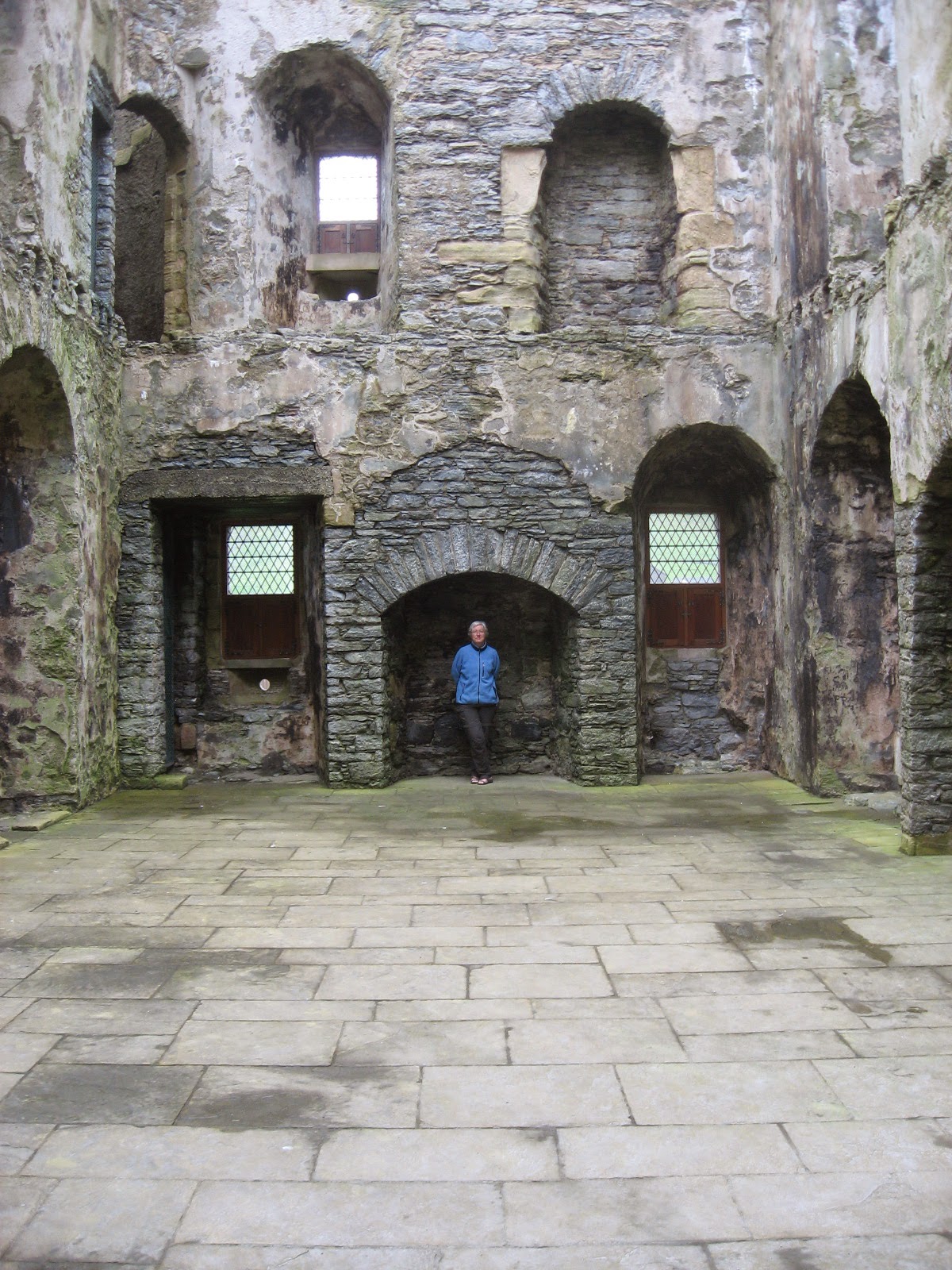
Scalloway Castle

Scalloway Castle
We'd only planned to stay a couple of days in Lerwick, with maybe a day to see the island, however, we were weatherbound and ended up staying four days instead. This wasn't a bad thing as Lerwick was very nice. Due to the North Sea oil money, it felt a lot more prosperous than Stornoway. They had an excellent museum which wouldn't have looked out-of-place in a major city. It's also been a major port since the 16th century and there were many fantastic, old stone buildings and residences around the town highlighting Scottish masonry skills. We hired a car for a day and went all round the island, saw the ancient sites and of course Shetland ponies! We attended a Shetland pony show and walked all round the town. We did another provisioning run to Tesco, the boat is now stuffed full
of provisions which will hopefully last 3-4 months.
Shetland pony
Shetland ponies


Shetland pony show

We had planned to leave Saturday, but, as there was a Force 11, Violent Storm, (56-63 knots) in the local forecast we decided the prudent move was to stay in port. One Norwegian boat decided to head out and hopefully get to Norway before the storm, maybe they knew something we didn't, hope they made it. The other cruisers all decided to stay and wait.

Meeting the other cruisers in Lerwick made us feel a little inadequate. There was so much experience and skill in evidence that we were beginning to feel a little bit out of our element. We met:

Dick and Elly - Dutch sailors with 200,000 cruising miles under their keel. Dick is a yacht designer and had designed their aluminum boat. Elly is a sailing author with four books to her credit. They gave us a tour of their boat, but, as their books were only in Dutch we weren't able to do more than look at pictures of their voyages which included Antarctica and Norway. The boat was lovely with many custom features. They have lived aboard for twenty-five years.

Gary and Leslie - U.S. sailors from California who have sailed around the world and then some. They gave us valuable info about Norway  as they were just returning from their second summer cruise there. They lay the boat up in the U.K. each winter and fly back to the U.S.

The storm blew through on Saturday and Sunday dawned flat calm. With hindsight, this is when we should have left. However, we chose to leave Monday.


LERWICK -> BERGEN
We left Lerwick on Monday, August 23. The forecast was ok, F4-5 winds, but, it was going to be NE, on-the-nose. However, it was due to back to N/NW which was favourable so we went. We made slow progress on Monday. One highlight was seeing two whales. The wind was slowly increasing.

About 1/3 of the way across the North Sea, the latest weather forecast gave a hint that it wasn't going to be so rosy as first indicated. There was a '...possibility  of a F8 gale later the next day...'. Right on schedule, Tuesday at 1700, the wind suddenly increased to a steady 44 knots, with gusts to 50. This wasn't a F8 Gale, this was an F9 Strong Gale, we couldn't believe our bad luck. We were about
ten miles off an oil platform at this point and had just started to pass through two rings of eleven ships that appeared to be lined up to get into the plaform for loading or whatever. They had been circling the platform in two queues and I'd been watching them on the AIS. As soon as the wind hit, they all dispersed and moved away from the platform, guess they were taken by surprise as well.
Unfortunately, this meant that there were now eleven ships all randomly moving about, they seemed to be just idling as they weren't moving much and we were right in the middle of it. It became like a game of bumper cars as the ships frequently changed direction and we never knew when, or, if, they'd start moving our way. We spent the night pinned to the AIS screen. We called one ship up to ask if they could give us a weather report which they did. We also asked if they could see us on their radar. They couldn't, until we gave them our location.

When the wind hit, we had hesitated about heaving-to. We had wanted to continue to sail to try and get away from the shipping. As soon as we cleared the ships, we were going to heave-to. Events intervened. Our newly repaired (for around $500) mainsail ripped in half again, about six inches below where it had been repaired. We had asked the sail loft to put a new panel in. When the sail
came back from Glasgow they had only put a patch on which obviously wasn't adequate.

After a tense Tuesday night, the next day had a few other momentous events:

0530 - we started sailing again. Two of the hose clamps which are used to attach the windvane's control lines to the wheel, snapped in half. We hove-to again and after digging out more hose clamps from under the v-berth, repaired.

0700 - our kerosene lantern, for some unknown reason, had earlier started leaking kerosene all over the salon table. We had quickly taken it down and stuffed it into a bucket with newspapers. When we moved the bucket to get the hose clamps out to fix the windvane, the bucket fell over and yes, the glass chimney shattered into a million pieces and we now had kerosene and broken glass everywhere.

Isn't sailing fun!

By 1000 Wednesday, August 25, we were motoring in about 30 knots. We had been unable to properly fix the windvane clamps and they broke again. We had lots of diesel and wanted
to make sure we got to the coast of Norway to make landfall before dark so we motored. Visibility was bad, we couldn't even see Norway until we were about eight miles off. Between the chartplotter and the autopilot it was a very smooth, easy entry onto a lee shore. We had been worried we might
encounter some breakers going in, but, the entrance was about a mile wide and we just rode the waves in under a rapidly darkening evening sky. We had previously located an anchorage only about three miles in from the sea. At 2100, we were tied up safely on a mooring ball, the only boat in a tiny, perfect, calm, very beautiful anchorage.

We had survived the North Sea, which had lived up to its fearsome reputation. Our anticipated 36 hour 'puddlejump' had turned into a 60 hour ordeal, but, we had arrived safely in Norway and were excited to be here!

 photo arrow.pngCONTINUE READING

Saturday, 24 July 2010

June 3, 2010 - July 24, 2010
Savannah GA U.S.A -> Stornoway, Scotland U.K.
3,600 nautical miles
51 days

As previously described, we departed Savannah in a bit of a rush at 1400. We had planned a shakedown cruise, but, only managed a day sail a couple of days before departure. We knew this
wasn't adequate and we really should have done better, but we didn't. As we'd be fairly close to the coast for the first part of the passage, we took extra charts and thought we'd head in if we had a problem. Likewise, due to pressures of various weather windows and that we were leaving at the tail end of the viable time for the passage we decided to do it non-stop. If we'd stopped in Bermuda and/or the Azores, it would have added several weeks to the voyage and would have meant more miles to sail as well. We had been to Bermuda before. The Azores sound nice, but, we didn't want to get stuck in the light winds of the Azores High either. So, we decided to head for a point at 40N  050W and then pick up the Great Circle Route directly to Scotland. We took the Bermuda and Azores (and Falmouth) charts, 'just in case'. We knew the North Atlantic route would be more challenging and that it probably wasn't the best choice for our first, long ocean passage. However, as a proving ground, it was a good exercise. It now means that we feel confident in the boat and ourselves as it probably isn't ever going to be much worse than what we've already experienced! We now know what to expect and how to prepare. We also learned techniques for sailing and living on-board that worked well for us and this boat.

The 3,600 mile length was miles 'made good'. We may have and probably did, sail many more miles than that, but, as our speed log wasn't working we don't really know how many miles we sailed. The most interesting thing about the voyage was how evenly it split into almost two distinct passages of
about 3-1/2 weeks each and 1,800 miles. Both were plagued at times with light and variable winds, but, conditions were quite different in each half.

The first 1,800 miles or so from Savannah to 40N was warm, sometimes too warm, sunny and
quite pleasant. We experienced all the cruiser cliches, the flying fish found on deck in the morning, the porpoises swimming under the bow and beside the boat and the evening phosphoresence in our wake. There were one or two days of extremely nice sailing.
It started like this

It started like this
Sunset at sea
Past 40N, the water temperature changed. Along with this came fog (twelve days of it), cold water with resulting condensation making a wet, miserable boat and winds alternating between way too little and way too much. After the fog, it was grey and cloudy day-after-day. So much so, that we
never saw the moon or stars that we thought we'd be enjoying in the middle of the ocean.

Rather than bore you with a summary of every day, I'll just summarize a few of the major events to give you a feel for what it was like. To be honest, writing this almost two weeks after arrival, the days of the passage seem to have just all just blended together anyway. Only a few events stand out, primarily ones where comments were made in the ship's log.

Day 1 Thursday, June 3.
Departure from Savannah GA. Light winds, lots of thunder/lightning onshore but nothing out here, thank goodness.

Day 2 - our galley cooking skills not quite perfected, eight raw eggs went all over the salon along with some instant coffee on top. To get some idea, imagine trying to cook while everything around you is moving and nothing you put down ever stays in one place.
Not all our galley attempts were failures, this is our first loaf baked aboard.
Day 3 -
Our first 'scary' night, squally rain, one reef in, but, should have been two. A very rolly ride that broke some dishes in the galley.

Day 5 - becalmed, when taking down mainsail noticed a grommet ripped out near the head of the sail, repaired it using the emergency grommets in our sail repair kit.
Grommet failure
Day 9 - we seem to be stuck in our very own 'Bermuda triangle' (probably a Gulf Stream eddy) from which we can't escape. No headway whatsoever, seem to be just tacking back and forth on the same line. Porpoises put on a show under the bow wave.

Day 11 - after perfect sailing yesterday, wind increased to 25-30 knots with squally rain and waves. We decided to heave-to to try and fix a serious water leak coming into our electrical panel. Glenn was able to trace it down to some small fibreglass cracks in a scupper. After he slathered on some caulking, we hove-to for the night and were able to dry it out enough to continue. After this, for the rest of the trip, we were disappointed to find how 'wet' the boat is. A lot of it was probably due to condensation, but, there were a lot of other leaks we still don't know where it's getting in.

Day 12 - noticed our shaft seal was 'dripping' more than normal. Something to keep an eye on. Wind 'on-the-nose'.

Day 16 - more porpoises and a sea turtle

Day 17 - becalmed again

Day 18 - the generator stopped working and we couldn't get it restarted, will have to cut our power consumption now

Day 19 - grey, cloudy and damp, very poor visibility, dolphins followed us for hours

Day 20 - really crummy night, downwind sailing = rolling from side-to-side

Day 21 - decided to head north earlier than planned to try and pick up more wind

Day 22 - becalmed again, almost 400 miles to 1/2 way still, cool, foggy and grey

Day 23 - thick fog and rain

Day 24 - heavy fog (and so it went for 12 days straight)

Day 25 - log entry reads 'fog/fog/fog and calm/calm/calm', it's getting tiresome

Day 26 - rough seas

Day 27 - becalmed again

Day 28 - grey and foggy, large waves

Day 30 - we have now left the ice limit (luckily we didn't see any, reports prior to departure indicated none south of 47/8N anyway). Hoping for better weather now.

Day 31 - gusts to 35 knots

Day 32 - one of the 'bad' days. Winds only around 30 knots, but very large seas. Waves were very confused and coming from two different directions. Boat entirely swamped by a breaking wave. Luckily hatchboards were in and sea hood was closed, but, still got a few litres in my lap below while
sitting at the nav station. Noticed a rip at the head of the mainsail.

Day 33 - spent most of day repairing mainsail, very difficult sewing.

Day 34 - becalmed again, grey and raining

Day 35 - G's 60th birthday. Opened a jar of jellybeans to celebrate.

Day 36 - first sunshine in 10+ days

Day 37 - becalmed again, grey and raining

Day 38 - gale conditions (Force 8, 34-40 knots), barometer 994. Continued to sail to windward, took a beating. Bilge full to floorboards, bilge pump decides to quit. G pumps manually.

Day 39 - heaved sigh of relief when pressure started to rise, assumed gale was over. However, when pressure rises too quickly it can cause even greater winds which it did. At 1930 the wind started to rise and went to Force 9, Strong Gale, 41-47 knots. We saw gusts over 50 knots. After last night's experience decided to heave-to. Caught by surprise as wind escalated so quickly, we still had the staysail out. When trying to roll it in somehow the middle third wouldn't roll up and it was flogging severely and vibrating the entire rig so much we thought the whole lot was going to come down. Eventually, we got it rolled up, but, found out the next day there was both a rip in the sail and the leech line had ripped right out. The severe gale ended at 0500.

Day 40 - sunny and cold and becalmed again.

Day 41 - winds 28-33 knots overnight. Why does it always come up at night? Staysail fixed and operational again. Another grommet is ripping out of the mainsail. One windvane wheel clamp has broken.

Day 45 - a near gale, gusts to 37 knots

Day 47 - our second gale. All of a sudden, the windvane jibed the boat which was alarming. Rushing on deck we soon saw why. Our mainsail had ripped in half. Luckily, it was between the second and third reef (which we'd just had added), so, were able to put the third reef in. Decided to heave-to in case the rest of the sail decided to shred itself.
Not a pretty sight
Day 50 - land-ho! We can see St. Kilda, the most westerly islands of the Outer Hebrides.
Land Ho! St. Kilda
Day 51 - Saturday, July 24, hove-to off the Flannan Isles at 0100, gusts to 35+ and we are tired. So  close, but can't seem to quite get there. Very foggy in a.m., but, made landfall at Isle of Lewis, Scotland. As we couldn't get to Stornoway before dark, we dropped the hook in Broad Bay, Isle of Lewis, made a couple of phone calls and then went directly to sleep. We decided to go around the point to the town of Stornoway the next day where we could do Customs and Immigration etc.
Butt of Lewis

Broad Bay, Isle of Lewis, our first anchorage after our transAtlantic passage
In summary, the passage seemed unusually long. In reviewing other people's experiences, it did seem to take us much longer than 'normal'. However, we were in a much smaller boat than most people do it in. The design of the boat is also not 'fast'. The design is very seakindly, stable and safe and we'd rather have that than speed. We were also sailing cautiously at night and also during the day after our sails started to disintegrate. We also didn't motor at all as our diesel was limited (we took 50 gallons in tanks and 30 gallons on deck. We arrived with 30 gallons left.) The light and variable winds and lack of predicted winds didn't help either. We were probably becalmed at least 4-5 full days on the voyage. We were also hove-to for maybe 2-3 days. Our worst day's mileage was 5 which was only achieved by drifting in a bit of current. Our best day's mileage was 116 which we did on 2-3 days. Generally, we found our average mileage to be about 500 miles per week. We had hoped this would pick up on the second half of the trip, but, it didn't as the expected prevailing Westerlies never materialized.
It ended like this

It ended like this
After the first couple of weeks, we had our routine set and each day seemed much the same, just dealing with the different weather conditions. Sleep deprivation was a problem early on when we tried to maintain the standard three hour watches. After a couple of weeks, it was clear this wasn't going to work and we changed to six-hour watches on a fixed night schedule (A. did 8-2, G. did 2-8). During the day, there were no set watches. This improved things immensely.

The windvane was the absolute best piece of gear we bought. Everybody crossing an ocean should have one. We thought it would be difficult to learn and use. However, maybe due to the traditional design of our boat, it worked perfectly out of the box, from the very first sail. It worked on all points of sail and in all winds. Expensive, but worth almost any price! It meant we only had to steer for as long as it took to make a course change and reset the windvane. The fact it requires no power was also a huge benefit. After the generator died, we could only charge one hour a day and needed this to run the instruments. Actually, an hour a day wasn't enough and as it was we could only check AIS every 1/2 hour. We will have to deal with this charging issue at some point.
Monitor windvane
Second best piece of gear was the AIS. We bought a new VHF radio that has an AIS receiver in it, so, the cost was neglible. It is so great to be able to see at a glance whether an approaching ship is going to be a problem or not. It enabled us to take evasive action for one ship and also use DSC to call up a couple of others that we were nervous about to make sure they knew we were there (they didn't know we were there but at least they answered the call). We do have an old radar set, but, didn't use it due to power consumption and also more interpretation practice is required on our parts.

Towards the end of the trip, it was very hard to believe we'd been out there almost two whole months! The lack of exercise was causing negative physical symptoms and we were running low on food. We had originally planned to go direct to Bergen, Norway, our original destination, but, due to the length of the voyage and the damage to our gear we decided to make landfall in Stornoway, Scotland (another one of the extra charts I'd purchased 'just in case') to rest, make repairs, obtain Norway visas and reprovision before moving on to Norway, about 350 miles away.
Black Sheep II at the dock in Stornoway


 photo arrow.pngCONTINUE READING